Some details are subject to change
This conference brings together leading thinkers from technology, economics, politics, philosophy, sustainability, and futures studies. Together they will explore both the opportunities opened by accelerating technology and the institutional and political changes needed to ensure those opportunities benefit humanity.
Rather than discussing emerging technologies in isolation, the speakers will examine how technological possibilities might interact radically with economics, politics, institutions, culture, and the planetary environment.
For more details about the conference, see The Technoprogressive Opportunity: The future of ethics and emerging technologies.
To register to attend the conference in person, please visit this Luma page.
Note: Unless otherwise stated, speakers are expressing their personal views, and aren’t representing organisations with which they are associated.
Indra Adnan
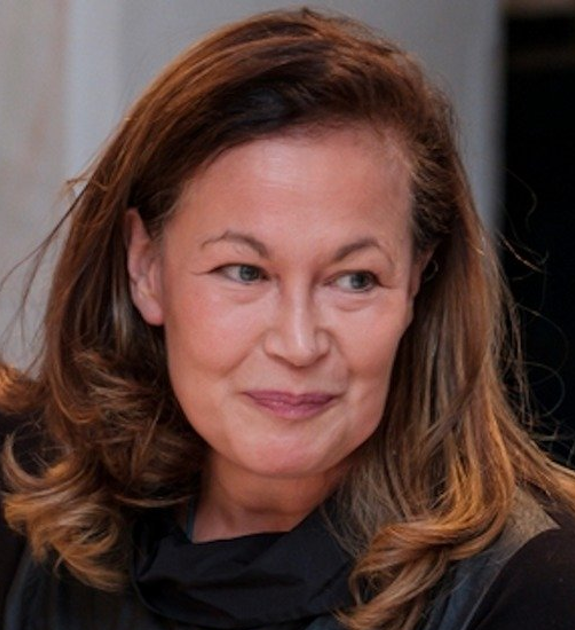
Co-Initiator and Founder, The Alternative UK
Topic: A Parallel Polis For The Regenerative Era
For over twenty years, Indra Adnan has been writing, consulting, network-building and event-organising on the themes of future politics, conflict transformation, the role of the arts and integral thinking.
She is Founder and Co-initiator of The Alternative UK political platform, which answers the question: if politics is broken, what’s the alternative?
Indra is concurrently a psycho-social therapist, founder of the Soft Power Network, and a writer and events producer. She has consulted to the World Economic Forum, Indian, Finnish and Danish governments, NATO, the Scottish Executive, and the Institute of Contemporary Arts amongst others.
Her book The Politics of Waking Up: Power & Possibility In The Fractal Age is published by Perspectiva Press.
Mark Cliffe

Visiting Fellow, Global Systems Institute, University of Exeter
Topic: Tipping Points – How Positive Should We Be?
Mark Cliffe is an economist specialising in analysing disruptive change. He is a Visiting Professor at the London Institute of Banking & Finance (LIBF) and a Visiting Fellow at the Global Systems Institute at the University of Exeter. He was previously Chief Economist of the ING Group, a global financial services group.
Based on his long experience as a macroeconomic forecaster, Mark consults on scenarios that help clients navigate the rapidly evolving and interacting transformations in the environment and climate, technology and consumer behaviour, society and politics, and economic policy and financial markets. He has advised the boards of a number of think tanks and business networks, as well as reaching mass audiences with thought leadership thorough global media channels such as the Financial Times, Project Syndicate and Barrons.
Didier Coeurnelle
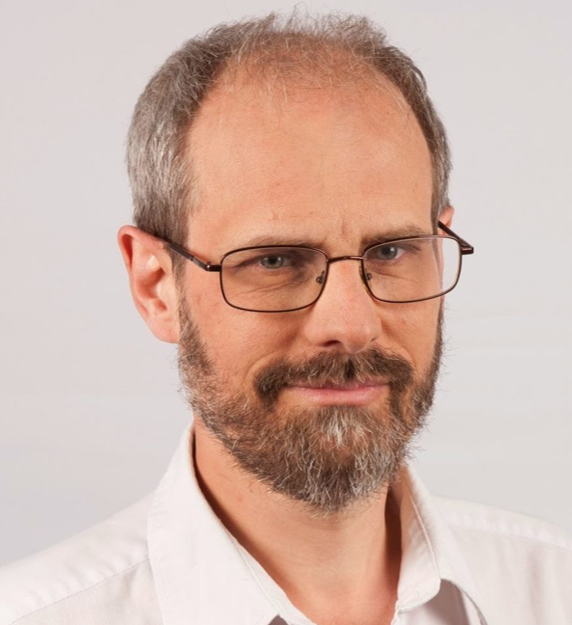
Co-chair, Heales (Healthy Life Extension Society)
Topic: Navigating dual existential challenges: Defeating aging & safeguarding AGI
As a world citizen, Didier Coeurnelle has been a member of international civil society organizations promoting global democracy for more than 20 years. In particular, he has been a long time supporter of Democracy Without Borders and the Campaign for a United Nations Parliamentary Assembly.
As a “technoprogressist”, Didier is co-chair of Heales (Healthy Life Extension Society), an NGO based in Brussels. Heales publishes a monthly newsletter of information, The Death of Death, and organizes international conferences.
Didier is also a spokesman of the French association Technoprog, which aims to “spread the themes and questions related to technologies that could extend and enhance the lives of individuals and of humankind”. Recently, Didier has also become actively involved in addressing existential risks from advanced AI, notably through PauseAI and advocacy for a binding international agreement to prevent the uncontrolled development of superintelligence.
Tony Czarnecki
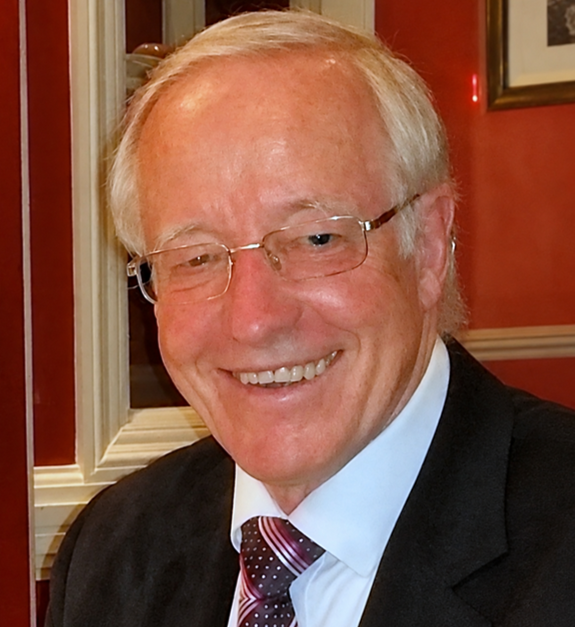
Managing Partner, Sustensis
Topic: Trust and democracy in the wake of AI
Tony Czarnecki is a futurist, who spent most of his life working world-wide as a consultant for large global companies. In 1996, he founded Sustensis, a management consultancy focusing on business sustainability, which tried to answer the question: “How can companies survive for the long term?” During that time, Sustensis included over 50 partners.
In 2018 Sustensis was converted into a think tank on humanity’s transition to coexistence with superintelligence, when Tony realised it is time to ask: “How can the human species survive for the long term?”
His books include “Who could save Humanity from Superintelligence?, “Federate to Survive!, 2030 – Towards the Big Consensus, and Prevail or Fail: A Civilisational Shift to the World of Transhumans.
Aubrey de Grey

President and Chief Science Officer, LEV Foundation
Topic: Lessons from building a pro-longevity movement
Aubrey de Grey is a biomedical gerontologist, author and advocate for the development of therapies to prevent and reverse age-related ill health. He devised the Strategies for Engineered Negligible Senescence (SENS), a comprehensive approach to rejuvenation based on repairing the molecular and cellular damage that accumulates with age.
Aubrey has co-founded several organisations that have helped build the modern longevity movement, including Methuselah Foundation, SENS Research Foundation and, most recently, LEV Foundation, where he is President and Chief Science Officer. LEV Foundation’s flagship Robust Mouse Rejuvenation programme investigates combinations of therapies targeting different aspects of ageing.
Aubrey is the author of The Mitochondrial Free Radical Theory of Aging and co-author, with Michael Rae, of Ending Aging.
James Hughes

Executive Director, Institute for Ethics and Emerging Technologies
Topic: Strengthening the technoprogressive current
James J. Hughes, PhD, is Executive Director of the Institute for Ethics and Emerging Technologies and a Senior Research Fellow at UMass Boston’s Center for Applied Ethics. A sociologist and bioethicist, he is the author of Citizen Cyborg: Why Democratic Societies Must Respond to the Redesigned Human of the Future, and has spent three decades arguing that human enhancement and artificial intelligence must be steered by democratic institutions, not left to markets or authoritarians.
His current work focuses on AI governance, neurotechnology ethics, and building a technoprogressive politics that pairs radical technological change with an equally radical commitment to equality and human rights.
Indy Johar

Co-Founder, Dark Matter Laboratories
Topic: The Corrigible State
Indy Johar is an architect, systems thinker and co-founder of Dark Matter Laboratories, where he explores how the underlying institutions and infrastructures of society need to be redesigned for an age of profound technological and ecological change.
He is also co-founder of the RIBA award-winning Architecture 00, a founding director of Open Systems Lab, and helped seed initiatives including WikiHouse and OpenDesk. His work ranges across the future of cities, governance, finance, property rights, public goods and the institutional responses required by climate change and other systemic challenges.
Indy is a Professor at RMIT University and has taught and lectured at institutions including UCL, Princeton, Harvard and MIT. He received the London Design Medal for Innovation in 2022 and an MBE for services to architecture in 2023.
Pat Kane
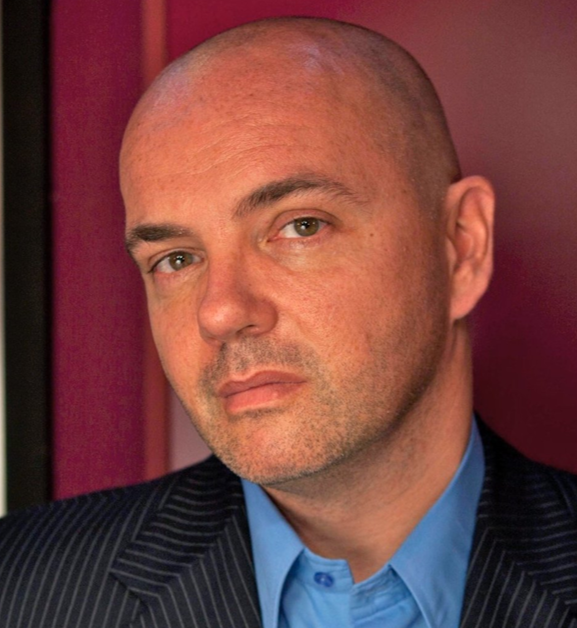
Co-Initiator & Editor, The Alternative UK
Topic: A Parallel Polis For The Regenerative Era
Pat Kane is a writer, musician, futurist and activist whose work explores the relationships between politics, culture, creativity and social change. He is co-founder and co-convenor of The Alternative UK, a political innovation platform seeking new forms of community agency and democratic participation beyond conventional party politics.
Pat is the author of The Play Ethic: A Manifesto for a Different Way of Living, and was curator of Nesta’s FutureFest for nearly a decade. An award-winning journalist, he was a founding editor of the Sunday Herald and has written for many leading UK publications.
He has also been closely involved in Scottish politics, including the Yes Scotland independence campaign and the Common Weal think tank, and is currently researching a new book on politics, creativity and the science of emotions. And he is still one half of the 80s pop duo Hue And Cry.
Steve Keen
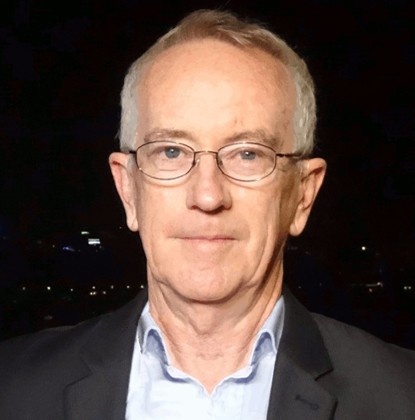
Economist and author, Debunking Economics
Topic: How economists will destroy capitalism
Steve Keen is an economist and author best known for his long-standing critique of mainstream neoclassical economics. He was one of the relatively few economists to warn publicly of the dangers that culminated in the 2008 Global Financial Crisis, receiving the Revere Award from the Real World Economics Review for this work.
Steve’s research applies complex-systems thinking to macroeconomics, with particular emphasis on private debt, financial instability, money creation, energy, and climate change. He developed the open-source modelling program Minsky to explore monetary dynamics outside conventional equilibrium models.
His books include Debunking Economics, Can We Avoid Another Financial Crisis?, and The New Economics: A Manifesto. He has previously held professorships at Kingston University London and the University of Western Sydney.
Matteo MacDermant
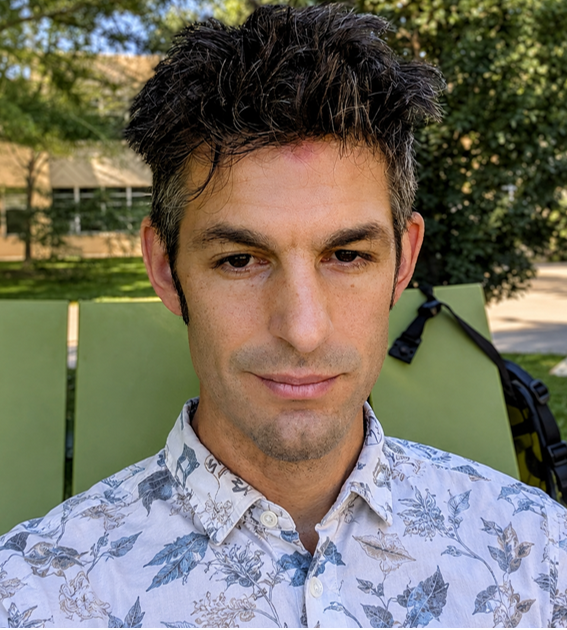
Researcher and podcaster, Bread and Robots
Topic: We Are Cosmic Revolutionaries
Matteo Rossi MacDermant is a researcher, writer and podcaster exploring how emerging technologies can be shaped to support democratic, equitable and abundant futures. He is a PhD candidate in American Studies at the University of New Mexico, where his research focuses on the Tech Workers Movement and the potential for organised technology workers to influence how technology is developed and deployed.
Matteo is the creator and host of Bread and Robots, a podcast and writing project exploring technoprogressivism, post-scarcity economics, universal basic income, labour movements and democratic alternatives to platform capitalism.
He is also an affiliate of the Institute for Ethics and Emerging Technologies and teaches an online course, An Introduction to Technoprogressive Worldbuilding.
Paul Mason
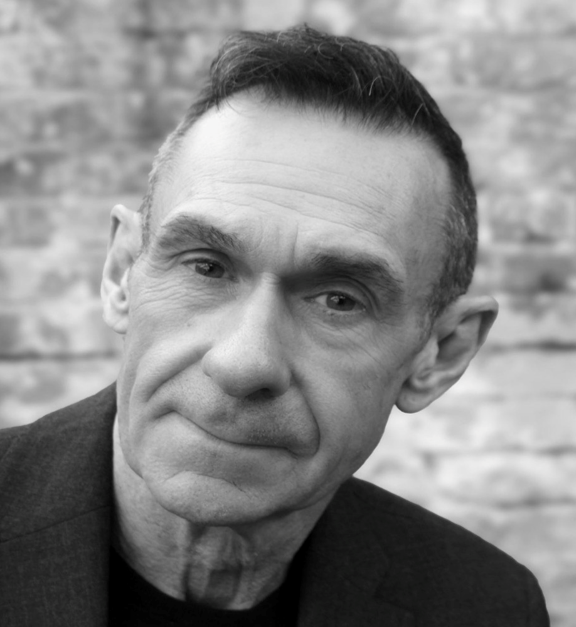
Journalist, The New World; Author, “PostCapitalism: A Guide to Our Future”
Topic: PostCapitalism and Agentic AI
Paul Mason is an award-winning journalist, author and broadcaster whose work explores the intersection of economics, technology, politics and social change. He was formerly Economics Editor at both BBC Newsnight and Channel 4 News, reporting on events including the global financial crisis, the Arab Spring and the Greek debt crisis.
His influential 2015 book PostCapitalism: A Guide to Our Future examined how information technology, automation and networked forms of organisation could enable a transition beyond traditional capitalism. His subsequent books include Clear Bright Future: A Radical Defence of the Human Being and How to Stop Fascism.
Paul’s latest book, Reds: A Global History of Communism, was published in August 2026. He is also an adjunct fellow at the Council on Geostrategy.
Parmy Olson
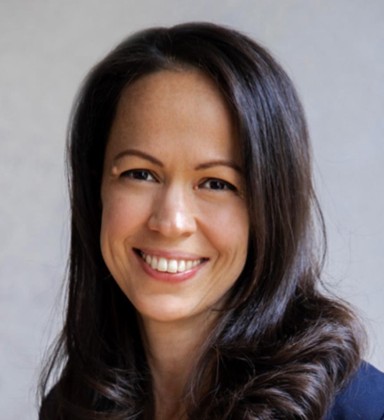
Technology Columnist, Bloomberg
Topic: Supremacy: The AI race that is changing the world
Parmy Olson is is a Bloomberg Opinion columnist covering technology, and was previously a reporter at The Wall Street Journal and Forbes.
Early in her career with Forbes, she wrote a series of articles about the subprime mortgage crisis. She served as Forbes‘ London bureau chief from 2008–12 before moving to the magazine’s San Francisco office.
Parmy won the 2024 Financial Times Business Book of the Year Award for Supremacy: AI, ChatGPT and the Race That Will Change the World. Her earlier (2012) book is We Are Anonymous: Inside the Hacker World of LulzSec, Anonymous, and the Global Cyber Insurgency.
Eva Pascoe
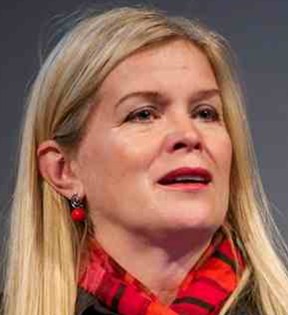
Vice Chair, Royal Society of Arts
Topic: Anticipating the technoprogressive future of commerce and work
Eva Pascoe is a trailblazing technologist and internet pioneer who has consistently defined the digital frontier. In 1994, she co-founded Cyberia, the world’s first internet cafe, sparking a global revolution in public digital access.
Transitioning from physical spaces to digital retail, Eva served as the first CEO of Topshop Online, where she spearheaded the brand’s e-commerce evolution. Today, she is a leading expert in e-commerce fashion retail tech, helping brands navigate the intersection of retail and innovation.
Currently serving as Vice Chair for the RSA, Eva also explores the human element of technology through sci-fi short stories, focusing on the evolving future of work.
Pravar Petkar

Head of Strengthening Democracy Desk, International Centre for Sustainability
Topic: Can Technology Make Democracy More Democratic?
Dr Pravar Petkar heads the Strengthening Democracy research desk at the International Centre for Sustainability, an independent think-tank in the City of London that fosters deeper cooperation between India, the UK, Europe and the USA.
Pravar’s research spans participatory and deliberative democracy, constitutional legitimacy, federalism and the relationship between democracy and emerging technology. His policy work explores how new forms of democratic participation, supported by technologies including AI, might strengthen institutions and civic engagement.
He completed his PhD in Law at the University of Edinburgh, developing a new theory of popular legitimacy for constitutional change in the UK, with particular attention to referendums and devolution. He is also a Co-Editor of the International Association of Constitutional Law Blog.
Laiba Rehman

Focused on existential risk, governance, and the future, at PauseAI UK
Topic: How I went from aspiring blue-sky researcher to extinction risk activism
Laiba is currently rapidly reorienting her life in the face of the risk of human extinction from advanced AI systems. Having previously been set on astrophysics research, interning at the European Space Agency and studying Astrophysics at the University of Leicester, losing her faith led to a strong anti-death sentiment, once she realised humans have no heaven to go to. She was briefly self-studying biology textbooks in order to switch to aging research or other death-prevention work, but after reading If Anyone Builds It, Everyone Dies, among other content, she realised AI was likely to kill everyone first.
She is now juggling several different hats, and is on or soon to be on trial periods at different organisations. Her substack blog, BlueprintingHeaven, talks about leaving Islam, AI safety, and futurism, focused on the idea of, if there is no heaven, we must build our own.
Mark Robinson
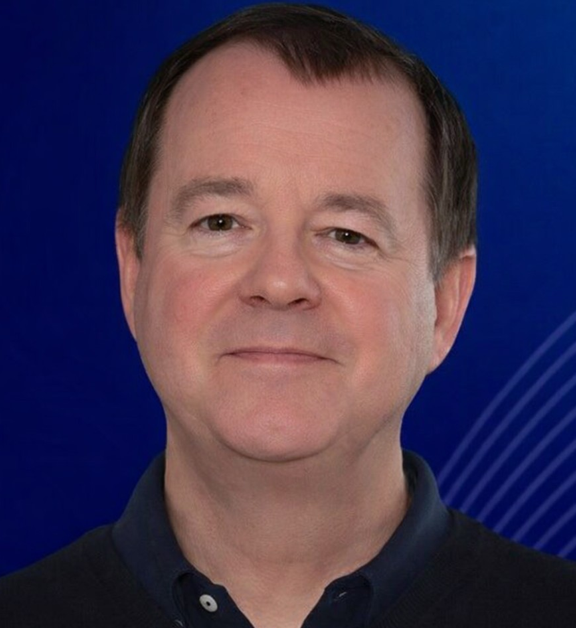
Senior Science Diplomacy Advisor, Oxford Martin School AI Governance Initiative
Topic: The future International Artificial Intelligence Agency
Dr Mark Robinson is a British Swedish academic and the Senior Science Diplomacy Advisor to the Oxford Martin AI Governance Initiative. His Oxford research explores how multinational organisations, especially strategic science alliances, navigate blurred boundaries across government, business, academia, and industry.
Inspired by Professor David Held’s work in global governance and the Beyond Gridlock framework, Dr Robinson applies Big Science leadership lessons to global AI governance. He advocates for an UN-led International Agency for AI Governance and publishes regularly, with recent work appearing in Global Policy, Science Diplomacy Review, and International Affairs Journal.
Marc Roux
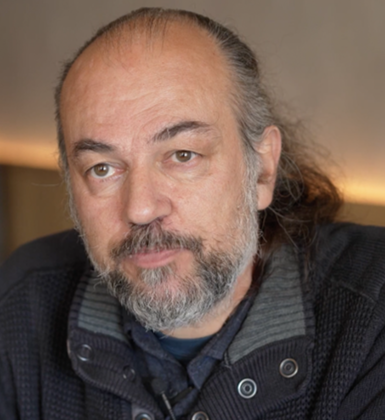
President, Technoprog
Topic: Changing human nature or changing human institutions?
Marc Roux is chair of the French Transhumanist Association (AFT-Technoprog) and affiliated scholar at the Institute for Ethics and Emergent Technologies (IEET). He lives in Greece.
In 2010, Marc co-founded AFT-Technoprog, the first French transhumanist organization that is characterized by its techno-progressive dimension. Since then, he has organized numerous conferences throughout France and has contributed five times on the TransVision international transhumanist congress. The last one in Abidjan (Ivory Coast).
Marc is regularly consulted for academic studies, by Government institutions, financial groups or companies and the media. He has written more than a dozen academic articles on transhumanism and a large number of blog posts. He is the author of the books, TECHNOPROG: le transhumanism au service du progrès social (with Didier Coeurnelle), and Quelle réception du transhumanisme en Afrique?, (with Ébénézer Njoh Mouellé).
Rohit Talwar
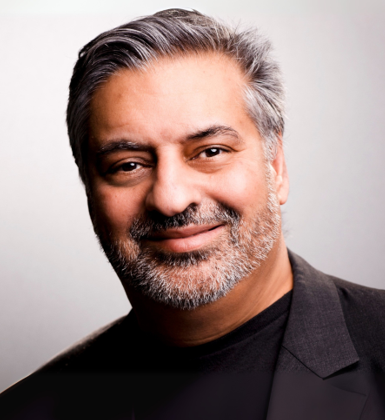
Global futurist and publisher, Fast Future
Topic: Technopolitics 2035 – How geopolitics and the technoprogressive agenda could shape each other
Rohit Talwar is a global futurist, author, strategic advisor and CEO of Fast Future, whose work explores how emerging technologies and wider forces of change could reshape business, society, and the human experience.
Rated #2 global futurist for 2026 in the Global Gurus rankings, Rohit advises corporations, governments, investors, NGOs and other organisations on anticipating disruption and developing more resilient, human-centred approaches to the future. He has delivered 2,000+ keynote speeches and executive workshops in 80+ countries on six continents.
Rohit also leads Fast Future Publishing and has contributed to and edited numerous books exploring technological and societal change. These include The Future of Business, Beyond Genuine Stupidity: Ensuring AI Serves Humanity, The Future Reinvented, and A Very Human Future: Enriching Humanity in a Digitized World.
Carissa Véliz
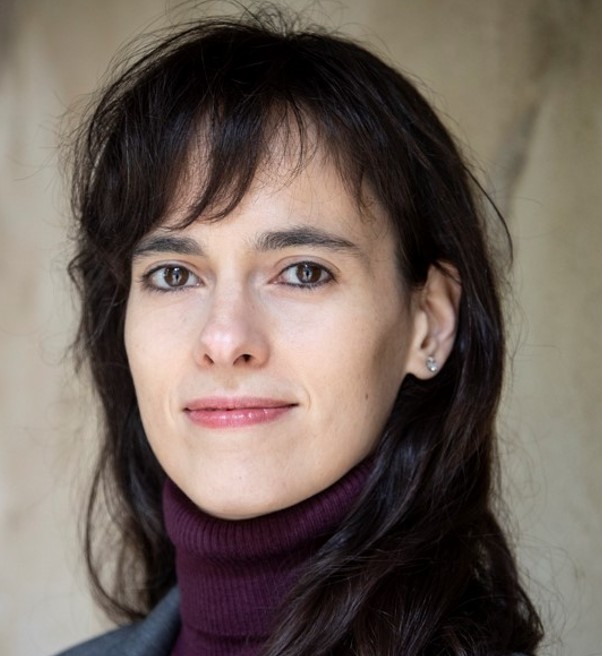
Professor in Philosophy, University of Oxford
Topic: Prediction, Power, and the Fight for the Future
Carissa Véliz is an Associate Professor in Philosophy at the Institute for Ethics in AI, and a Fellow at Hertford College at the University of Oxford. She is the recipient of the 2021 Herbert A. Simon Award for Outstanding Research in Computing and Philosophy. She is a member of UNESCO’s Women 4 Ethical AI. She advises companies and policymakers around the world on privacy and the ethics of AI. She is a board member of the Proton Foundation, along with Sir Tim Berners-Lee and Proton’s CEO Andy Yen.
Carissa is the author of the highly-acclaimed Privacy Is Power (an Economist book of the year, 2020) and the editor of the Oxford Handbook of Digital Ethics. Her new book Prophecy was described as “The most important book you will read for years” by Roger McNamee, the tech investor and best selling author, and has been long listed for the Financial Times Book of the Year Award.
Alex Williams
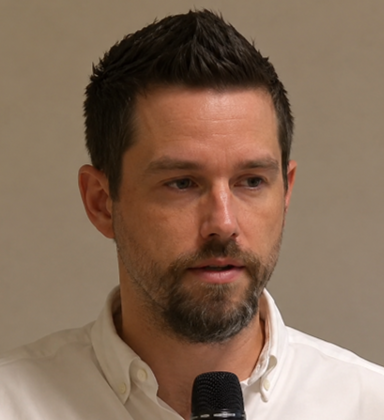
Political theorist and author, University of East Anglia
Topic: The paradoxes of contemporary AI capitalism
Alex Williams is a political theorist and lecturer in digital media and society at the University of East Anglia. His work explores the intersections of political power, emerging technology, capitalism, and possibilities for radically different futures.
With Nick Srnicek, Alex co-authored the influential Manifesto for an Accelerationist Politics and Inventing the Future: Postcapitalism and a World Without Work, which argued for harnessing technological development, automation and new forms of political organisation in pursuit of a post-capitalist future.
His other books include Political Hegemony and Social Complexity and, with Jeremy Gilbert, Hegemony Now: How Big Tech and Wall Street Won the World (And How We Win it Back), which examines the changing structures of economic, technological and political power in contemporary capitalism.

